Written by Chessboard · Updated 2026-10-12
Look at the saved results
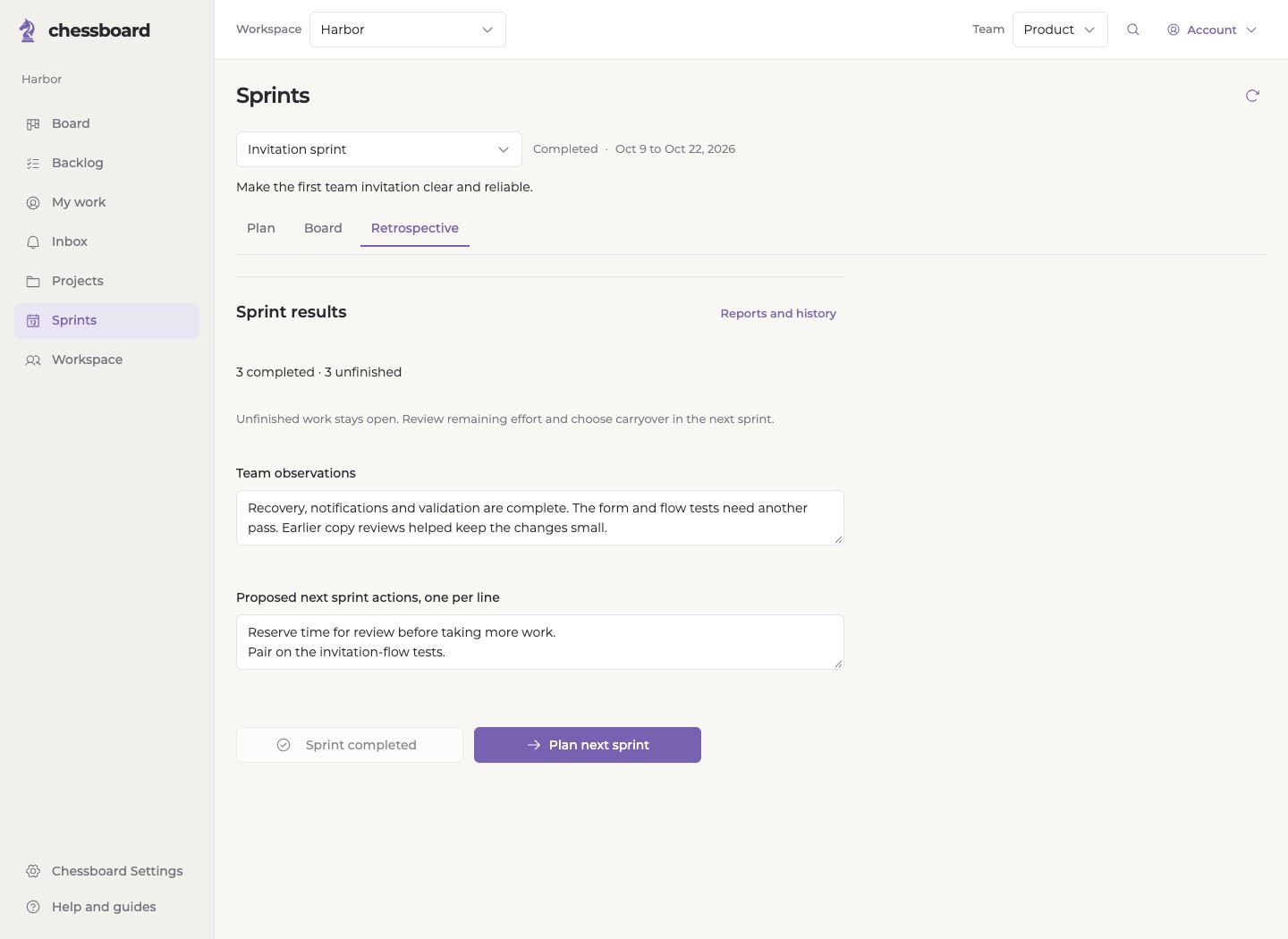
Open the sprint's Retrospective view. Review completed and unfinished work before completing the sprint.
Completing the sprint saves its results. Unfinished tasks remain open, and the completed board serves as a record of that sprint rather than an editable version of today's work.
Write observations people can use
Describe specific events instead of rating the team. “Recovery work took longer because the expired-link behavior was unclear” provides more context than “estimates were bad.”
- What finished, and what helped it finish?
- What did not finish, and what effort remains?
- Which interruption or dependency changed the plan?
- What one practice is worth trying in the next sprint?
Keep improvements optional and bounded
Add proposed next-sprint actions when the team has a practical change to try. For example: reserve review time before accepting more work, or pair on the invitation-flow tests.
Plan next sprint brings those suggestions into planning. They do not automatically change the completed sprint or become assigned delivery work. Review, edit or leave them out.
Choose carryover deliberately
Check unfinished tasks against current priorities and update remaining effort. Do not recreate work that is already Done.
Select what belongs in the new sprint, review owners and capacity and approve a new proposal. A previous commitment is evidence about the past, not permission to commit the same work again.
Keep the rhythm lightweight
A short review can be enough. Preserve the facts, choose a useful next action and return to the work.
Ordinary sprint planning and retrospective records are managed by people and application rules. You do not need another document-analysis run to finish a sprint.