
Written by Chessboard · Updated 2026-10-12
Create the workspace
A workspace is the shared home for your people, teams, projects and connections. Create it using your signed-in account and give it a recognizable name.
A new workspace starts with a team called Default. Rename that team if a more specific name helps, or keep it while you get started. The workspace and the team remain separate.
- Use the Workspace area to invite people and manage access.
- Confirm that each teammate accepted the invitation using the invited email.
- Add people to the team that will own the work; workspace membership alone is not team participation.
Create one real project
Open Projects and create a project for an outcome your team understands. Choose the participating team and add a short description.
Avoid importing every idea into the first project. A bounded pilot makes it easier to agree on scope and learn the workflow.
Review the starting context
If document assistance is enabled for your workspace, paste notes or upload a Markdown or text file. Saving the notes does not start analysis by itself. Choose the analysis action when you are ready.
Review the organized draft. Correct missing qualifications, remove unsupported interpretations and answer only questions that matter to the scope. Confirm project brief when the result is useful to your team.
You can also create and manage tasks manually. A document is not a prerequisite for ordinary board work.
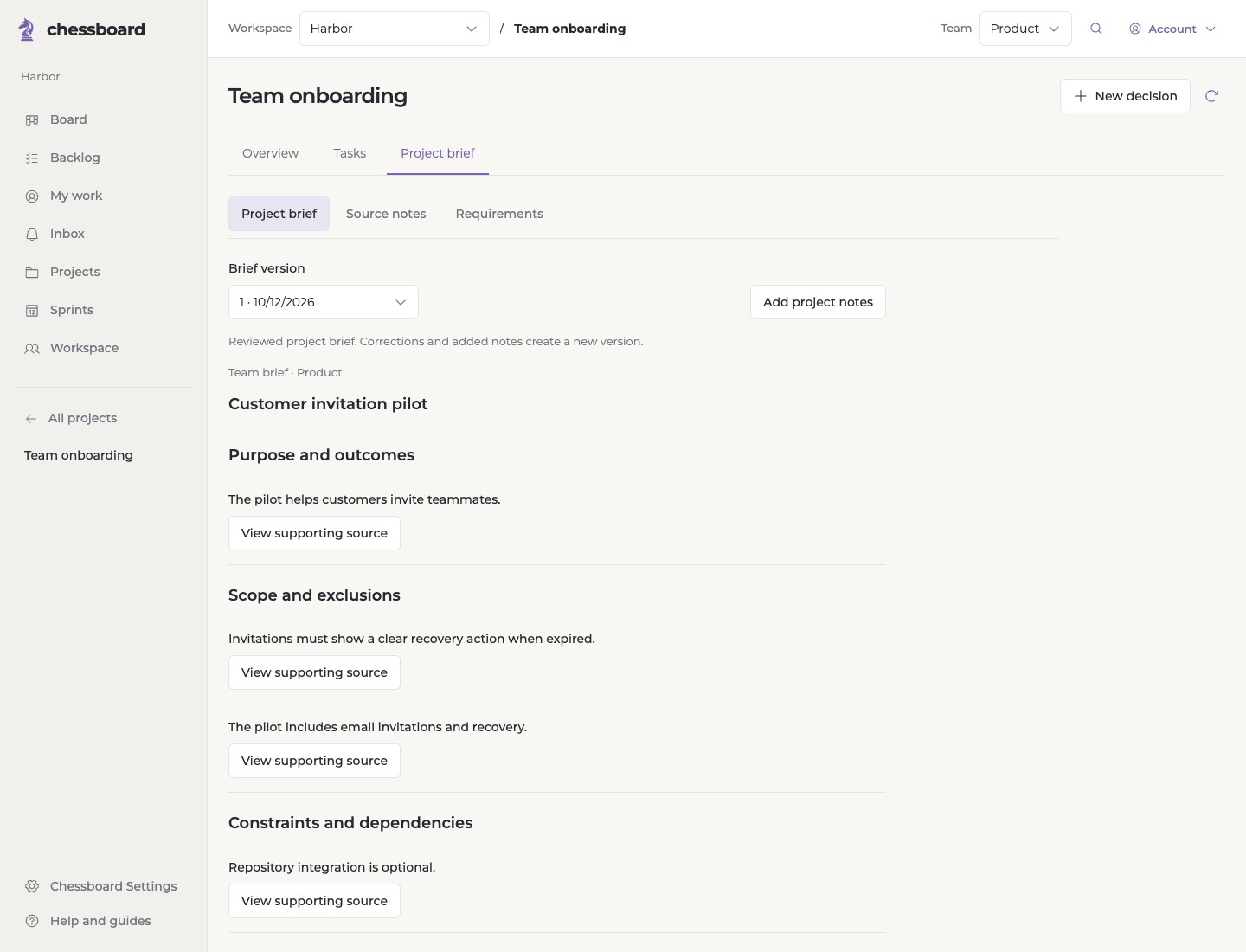
Plan a small first sprint
Open Sprints, create a sprint and write an outcome. Add dates and participants' capacity, then choose tasks from the backlog.
Review owners, estimates and dependencies before proposing the work. The designated planning approver reviews the proposal before the sprint becomes a commitment.
Once the sprint is active, Board shows the agreed work and My work shows each participant's assignments.
Finish with a short review
Use Retrospective to record what happened, complete the sprint and prepare the next one. Unfinished work stays open until you choose its next destination.
Keep the first review specific: what was harder than expected, what helped, and what you want to change next time.