
Written by Chessboard · Updated 2026-10-12
Write the outcome first
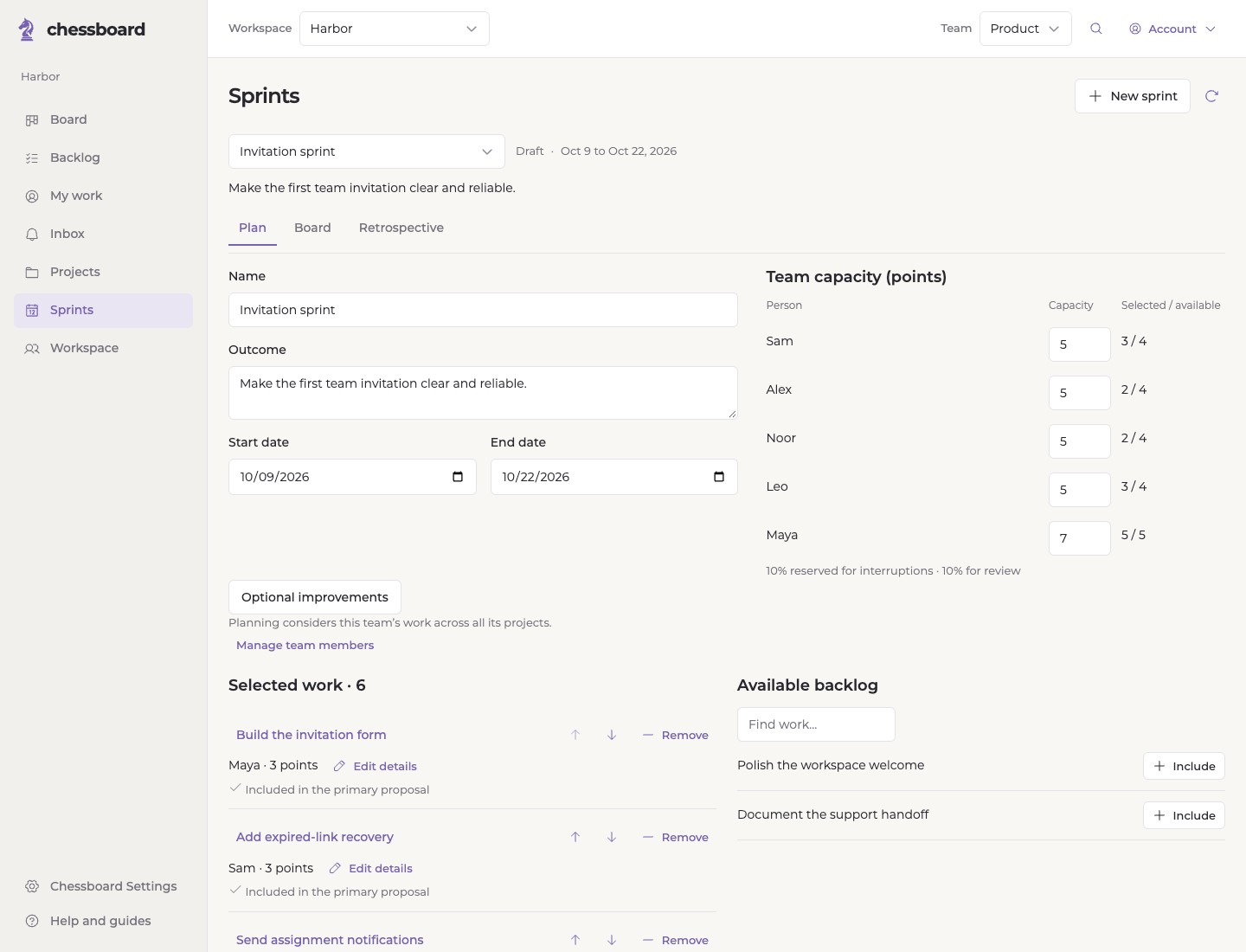
Create the sprint in Sprints and write what the team wants to achieve. An outcome such as “make the first invitation clear and reliable” is easier to use than a list of unrelated task names.
Set the dates and select the participating team. Sprint planning considers that team's work across its projects, so existing commitments and capacity matter even when you are looking at one project.
Leave room for real life
Enter each person's capacity in the team's effort unit. Use the interruption reserve and review allowance to keep some room outside planned delivery work.
Capacity is an input for discussion, not a promise about exact hours. Check vacations, on-call time, review duties and other sprint work before treating the available total as usable.
Select and prepare the work
Choose tasks from the backlog and arrange their order. Every selected task needs an appropriate owner and effort estimate. For unfinished work, review remaining effort rather than assuming the original estimate still applies.
Review dependencies and consequential unresolved decisions. If a specific missing fact prevents committing a task, clarify it or leave that task out of the proposal.
Review the proposal
Chessboard evaluates the selected work against current planning inputs. Review what is included and what is deferred, then let the designated approver confirm the proposal.
Approval records the commitment. Daily task stages can then change as people work without rewriting the original plan.
Make interruptions understandable
If an interruption changes the sprint's scope, review a sprint amendment with a reason. Do not hide new work inside an old commitment.
Team members can report blockers from My work or task details. Use that information to decide whether to resolve the blocker, change the plan or review the work for the next sprint.
Treat the next sprint as a new choice
Complete the retrospective and review unfinished tasks. Select carryover after checking remaining effort and current priorities.
The next sprint needs its own review and approval. Chessboard does not silently assign people or roll all unfinished work into a new commitment.